
Código fuente / Templates
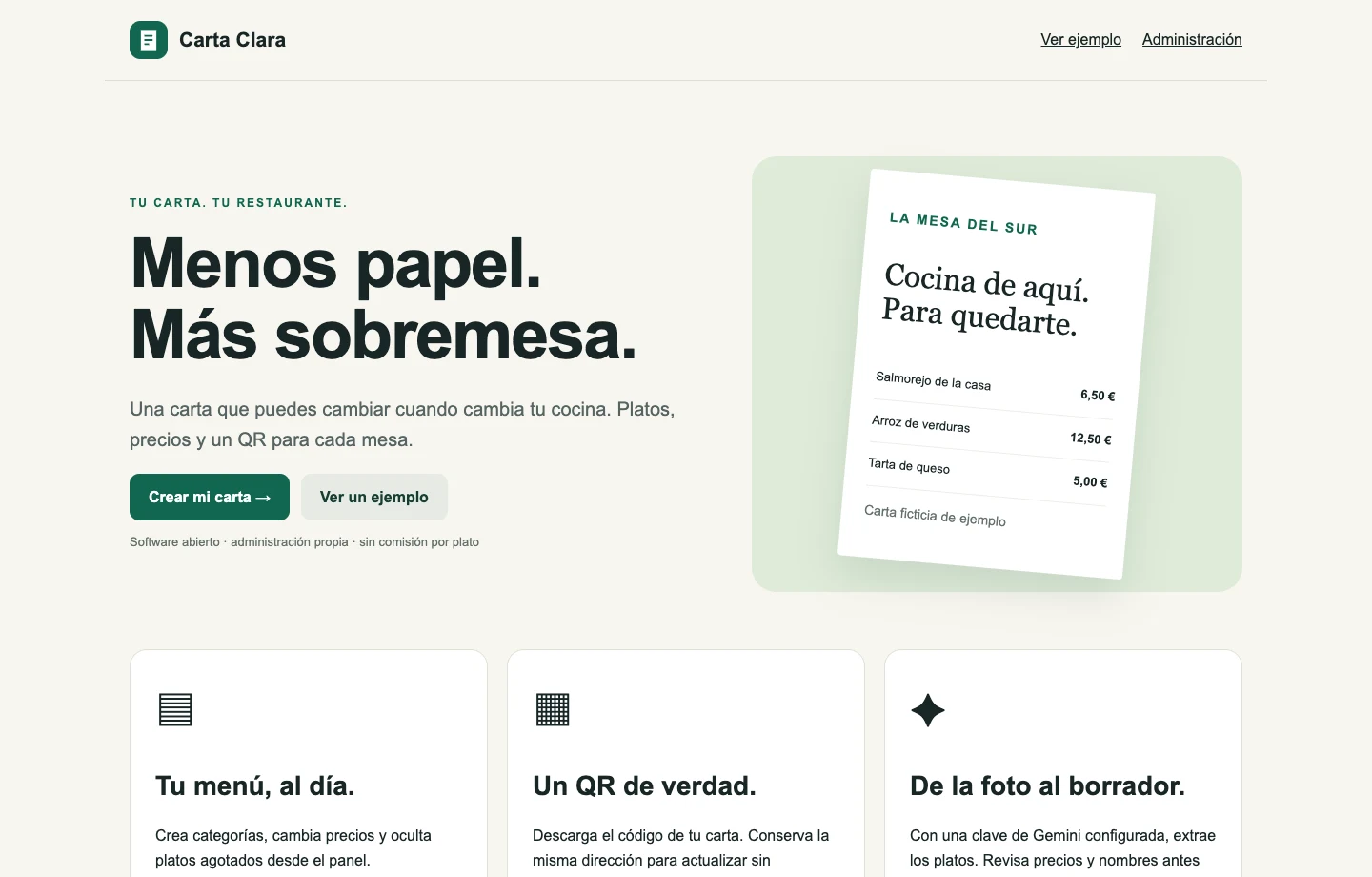
Carta Clara: carta QR, administración y lectura de fotos con Gemini
Una carta QR con panel por restaurante y lectura de fotos mediante Gemini. Código abierto, edición manual y revisión antes de incorporar platos.
Optimiza costos y latencia en apps de IA: caché en memoria y Redis, caché de embeddings, versioning, TTL dinámico, invalidación, multi-level cache y monitoreo.
El caché es esencial para optimizar costos y rendimiento en aplicaciones de IA. Las llamadas a LLMs son costosas en tiempo y dinero. En este tutorial aprenderás estrategias efectivas de caché para servicios de IA.
using Microsoft.Extensions.Caching.Memory;

public class MemoryCachedAIService
{
    private readonly IMemoryCache _cache;
    private readonly IAIService _aiService;

    public MemoryCachedAIService(IMemoryCache cache, IAIService aiService)
    {
        _cache = cache;
        _aiService = aiService;
    }

    public async Task<string> GetResponseAsync(string prompt)
    {
        var cacheKey = GenerateCacheKey(prompt);

        if (_cache.TryGetValue<string>(cacheKey, out var cachedResponse))
        {
            return cachedResponse;
        }

        var response = await _aiService.GenerateAsync(prompt);

        var cacheOptions = new MemoryCacheEntryOptions
        {
            AbsoluteExpirationRelativeToNow = TimeSpan.FromHours(24),
            SlidingExpiration = TimeSpan.FromHours(6),
            Priority = CacheItemPriority.Normal
        };

        _cache.Set(cacheKey, response, cacheOptions);

        return response;
    }

    private string GenerateCacheKey(string prompt)
    {
        using var sha256 = SHA256.Create();
        var hashBytes = sha256.ComputeHash(Encoding.UTF8.GetBytes(prompt));
        return $"ai_{BitConverter.ToString(hashBytes).Replace("-", "").Substring(0, 16)}";
    }
}using Microsoft.Extensions.Caching.Distributed;
using System.Text.Json;
public class DistributedCachedAIService
{
private readonly IDistributedCache _cache;
private readonly IAIService _aiService;
private readonly ILogger<DistributedCachedAIService> _logger;
public DistributedCachedAIService(
IDistributedCache cache,
IAIService aiService,
ILogger<DistributedCachedAIService> logger)
{
_cache = cache;
_aiService = aiService;
_logger = logger;
}
public async Task<AIResponse> GetResponseAsync(
string prompt,
CancellationToken cancellationToken = default)
{
var cacheKey = GenerateCacheKey(prompt);
// Intentar obtener del caché
var cachedBytes = await _cache.GetAsync(cacheKey, cancellationToken);
if (cachedBytes != null)
{
_logger.LogInformation("Cache HIT: {CacheKey}", cacheKey);
var cachedResponse = JsonSerializer.Deserialize<AIResponse>(cachedBytes);
if (cachedResponse != null)
{
cachedResponse.FromCache = true;
return cachedResponse;
}
}
_logger.LogInformation("Cache MISS: {CacheKey}", cacheKey);
// Generar respuesta
var response = await _aiService.GenerateAsync(prompt, cancellationToken);
// Guardar en caché
var responseBytes = JsonSerializer.SerializeToUtf8Bytes(response);
var cacheOptions = new DistributedCacheEntryOptions
{
AbsoluteExpirationRelativeToNow = TimeSpan.FromDays(7),
SlidingExpiration = TimeSpan.FromDays(1)
};
await _cache.SetAsync(cacheKey, responseBytes, cacheOptions, cancellationToken);
response.FromCache = false;
return response;
}
private string GenerateCacheKey(string prompt)
{
using var sha256 = SHA256.Create();
var hashBytes = sha256.ComputeHash(Encoding.UTF8.GetBytes(prompt));
return $"ai_{BitConverter.ToString(hashBytes).Replace("-", "")}";
}
}
public class AIResponse
{
public required string Content { get; set; }
public DateTime GeneratedAt { get; set; } = DateTime.UtcNow;
public bool FromCache { get; set; }
public Dictionary<string, string>? Metadata { get; set; }
}public class EmbeddingCacheService
{
private readonly IDistributedCache _cache;
private readonly ITextEmbeddingGenerationService _embeddingService;
public async Task<ReadOnlyMemory<float>> GetEmbeddingAsync(
string text,
CancellationToken cancellationToken = default)
{
var cacheKey = $"emb_{ComputeHash(text)}";
var cachedBytes = await _cache.GetAsync(cacheKey, cancellationToken);
if (cachedBytes != null)
{
// Deserializar embedding
var floatArray = new float[cachedBytes.Length / sizeof(float)];
Buffer.BlockCopy(cachedBytes, 0, floatArray, 0, cachedBytes.Length);
return new ReadOnlyMemory<float>(floatArray);
}
// Generar embedding
var embeddings = await _embeddingService.GenerateEmbeddingsAsync(
new[] { text },
kernel: null,
cancellationToken);
var embedding = embeddings.First();
// Serializar y cachear
var floats = embedding.ToArray();
var bytes = new byte[floats.Length * sizeof(float)];
Buffer.BlockCopy(floats, 0, bytes, 0, bytes.Length);
await _cache.SetAsync(
cacheKey,
bytes,
new DistributedCacheEntryOptions
{
AbsoluteExpirationRelativeToNow = TimeSpan.FromDays(30)
},
cancellationToken);
return embedding;
}
private string ComputeHash(string text)
{
using var sha256 = SHA256.Create();
var hashBytes = sha256.ComputeHash(Encoding.UTF8.GetBytes(text));
return BitConverter.ToString(hashBytes).Replace("-", "");
}
}public class VersionedCacheService
{
private readonly IDistributedCache _cache;
private readonly string _version;
public VersionedCacheService(IDistributedCache cache, string version = "v1")
{
_cache = cache;
_version = version;
}
private string GenerateCacheKey(string key)
{
return $"{_version}_{key}";
}
public async Task InvalidateVersionAsync()
{
// Cambiar versión invalida todo el caché anterior
// Implementar incremento de versión
}
}public class DynamicTTLCacheService
{
private readonly IDistributedCache _cache;
public async Task<string> GetWithDynamicTTLAsync(
string prompt,
Func<string, TimeSpan> ttlCalculator)
{
var cacheKey = GenerateCacheKey(prompt);
var cached = await _cache.GetStringAsync(cacheKey);
if (cached != null)
{
return cached;
}
var response = await GenerateResponseAsync(prompt);
// TTL basado en características de la respuesta
var ttl = ttlCalculator(response);
await _cache.SetStringAsync(
cacheKey,
response,
new DistributedCacheEntryOptions
{
AbsoluteExpirationRelativeToNow = ttl
});
return response;
}
}
// Uso
var response = await cacheService.GetWithDynamicTTLAsync(
prompt,
response => response.Length > 1000
? TimeSpan.FromDays(7) // Respuestas largas: TTL largo
: TimeSpan.FromHours(1)); // Respuestas cortas: TTL cortopublic class SemanticCacheService
{
private readonly IDistributedCache _cache;
private readonly ITextEmbeddingGenerationService _embeddingService;
private readonly double _similarityThreshold = 0.95;
public async Task<(bool Found, string? Response)> TryGetSimilarAsync(
string prompt,
CancellationToken cancellationToken = default)
{
// Generar embedding del prompt
var embeddings = await _embeddingService.GenerateEmbeddingsAsync(
new[] { prompt },
kernel: null,
cancellationToken);
var promptEmbedding = embeddings.First();
// Buscar prompts similares en caché (simplificado)
// En producción, usar una base de datos vectorial
var cachedPrompts = await GetCachedPromptsAsync();
foreach (var cachedPrompt in cachedPrompts)
{
var similarity = CalculateCosineSimilarity(
promptEmbedding,
cachedPrompt.Embedding);
if (similarity >= _similarityThreshold)
{
var response = await _cache.GetStringAsync(cachedPrompt.Key);
if (response != null)
{
return (true, response);
}
}
}
return (false, null);
}
private double CalculateCosineSimilarity(
ReadOnlyMemory<float> v1,
ReadOnlyMemory<float> v2)
{
// Implementación de similitud coseno
return 0.0;
}
private Task<List<CachedPrompt>> GetCachedPromptsAsync()
{
// Implementación
return Task.FromResult(new List<CachedPrompt>());
}
}
public class CachedPrompt
{
public required string Key { get; init; }
public required ReadOnlyMemory<float> Embedding { get; init; }
}public class TimeBasedInvalidation
{
private readonly IMemoryCache _cache;
public void SetWithExpiration<T>(string key, T value, TimeSpan expiration)
{
_cache.Set(key, value, new MemoryCacheEntryOptions
{
AbsoluteExpirationRelativeToNow = expiration
});
}
}public class EventBasedInvalidation
{
private readonly IMemoryCache _cache;
public void InvalidateOnEvent(string pattern)
{
// Invalidar todas las claves que coincidan con el patrón
// Nota: IMemoryCache no soporta pattern matching nativamente
// Necesitarías mantener un registro de claves
}
public void InvalidateRelated(string entityId)
{
// Invalidar caché relacionado con una entidad
var relatedKeys = new[]
{
$"entity_{entityId}",
$"list_with_{entityId}",
$"summary_of_{entityId}"
};
foreach (var key in relatedKeys)
{
_cache.Remove(key);
}
}
}public class SizeLimitedCache
{
private readonly IMemoryCache _cache;
private readonly long _maxSizeInBytes;
public SizeLimitedCache(IMemoryCache cache, long maxSizeInBytes)
{
_cache = cache;
_maxSizeInBytes = maxSizeInBytes;
}
public void Set<T>(string key, T value, long estimatedSize)
{
_cache.Set(key, value, new MemoryCacheEntryOptions
{
Size = estimatedSize,
Priority = CacheItemPriority.Normal
});
}
}public class MultiLevelCacheService
{
private readonly IMemoryCache _l1Cache; // Nivel 1: Memoria local
private readonly IDistributedCache _l2Cache; // Nivel 2: Redis
private readonly IAIService _aiService; // Nivel 3: Servicio IA
public async Task<string> GetResponseAsync(
string prompt,
CancellationToken cancellationToken = default)
{
var cacheKey = GenerateCacheKey(prompt);
// Nivel 1: Memoria local
if (_l1Cache.TryGetValue<string>(cacheKey, out var l1Response))
{
return l1Response;
}
// Nivel 2: Caché distribuido
var l2Response = await _l2Cache.GetStringAsync(cacheKey, cancellationToken);
if (l2Response != null)
{
// Poblar L1
_l1Cache.Set(cacheKey, l2Response, TimeSpan.FromMinutes(5));
return l2Response;
}
// Nivel 3: Generar desde IA
var response = await _aiService.GenerateAsync(prompt, cancellationToken);
// Poblar ambos niveles
_l1Cache.Set(cacheKey, response, TimeSpan.FromMinutes(5));
await _l2Cache.SetStringAsync(
cacheKey,
response,
new DistributedCacheEntryOptions
{
AbsoluteExpirationRelativeToNow = TimeSpan.FromHours(24)
},
cancellationToken);
return response;
}
private string GenerateCacheKey(string prompt)
{
using var sha256 = SHA256.Create();
var hashBytes = sha256.ComputeHash(Encoding.UTF8.GetBytes(prompt));
return BitConverter.ToString(hashBytes).Replace("-", "");
}
}public class CacheMonitor
{
private long _hits;
private long _misses;
private readonly ILogger<CacheMonitor> _logger;
public void RecordHit()
{
Interlocked.Increment(ref _hits);
}
public void RecordMiss()
{
Interlocked.Increment(ref _misses);
}
public CacheStatistics GetStatistics()
{
var totalRequests = _hits + _misses;
var hitRate = totalRequests > 0 ? (double)_hits / totalRequests : 0;
return new CacheStatistics
{
Hits = _hits,
Misses = _misses,
TotalRequests = totalRequests,
HitRate = hitRate
};
}
public void LogStatistics()
{
var stats = GetStatistics();
_logger.LogInformation(
"Cache Stats: {Hits} hits, {Misses} misses, {HitRate:P2} hit rate",
stats.Hits,
stats.Misses,
stats.HitRate);
}
}
public class CacheStatistics
{
public long Hits { get; init; }
public long Misses { get; init; }
public long TotalRequests { get; init; }
public double HitRate { get; init; }
}// ✅ TTL basado en volatilidad de datos
var staticDataTTL = TimeSpan.FromDays(7);
var dynamicDataTTL = TimeSpan.FromMinutes(5);
var realtimeDataTTL = TimeSpan.FromSeconds(30);// ✅ Limitar tamaño para evitar problemas de memoria
services.AddMemoryCache(options =>
{
options.SizeLimit = 1024; // Límite en unidades arbitrarias
});// ✅ Solo cachear operaciones costosas
public async Task<string> GetDataAsync(string id, bool useCache = true)
{
if (!useCache || IsRealtimeRequired(id))
{
return await FetchFromSourceAsync(id);
}
return await GetFromCacheAsync(id);
}public class CacheWarmer : IHostedService
{
public async Task StartAsync(CancellationToken cancellationToken)
{
// Pre-cargar datos frecuentes al iniciar
await WarmFrequentQueriesAsync(cancellationToken);
}
private async Task WarmFrequentQueriesAsync(CancellationToken cancellationToken)
{
var frequentQueries = await GetFrequentQueriesAsync();
foreach (var query in frequentQueries)
{
await _cachedService.GetResponseAsync(query, cancellationToken);
}
}
public Task StopAsync(CancellationToken cancellationToken) => Task.CompletedTask;
}El caché es esencial para aplicaciones de IA eficientes. Implementa caché en múltiples niveles, monitorea hit rates, y ajusta TTLs basándote en patrones de uso. Una estrategia de caché bien diseñada puede reducir costos hasta 80% y mejorar significativamente el rendimiento.
Palabras clave: caching strategies, distributed cache, Redis, memory cache, AI optimization, performance, cost reduction
Una carta QR con panel por restaurante y lectura de fotos mediante Gemini. Código abierto, edición manual y revisión antes de incorporar platos.

Luca Cantón ha creado LO-E, un hub donde convierte las ideas de videojuegos que le van pasando por la cabeza en siete mundos jugables desde el navegador.
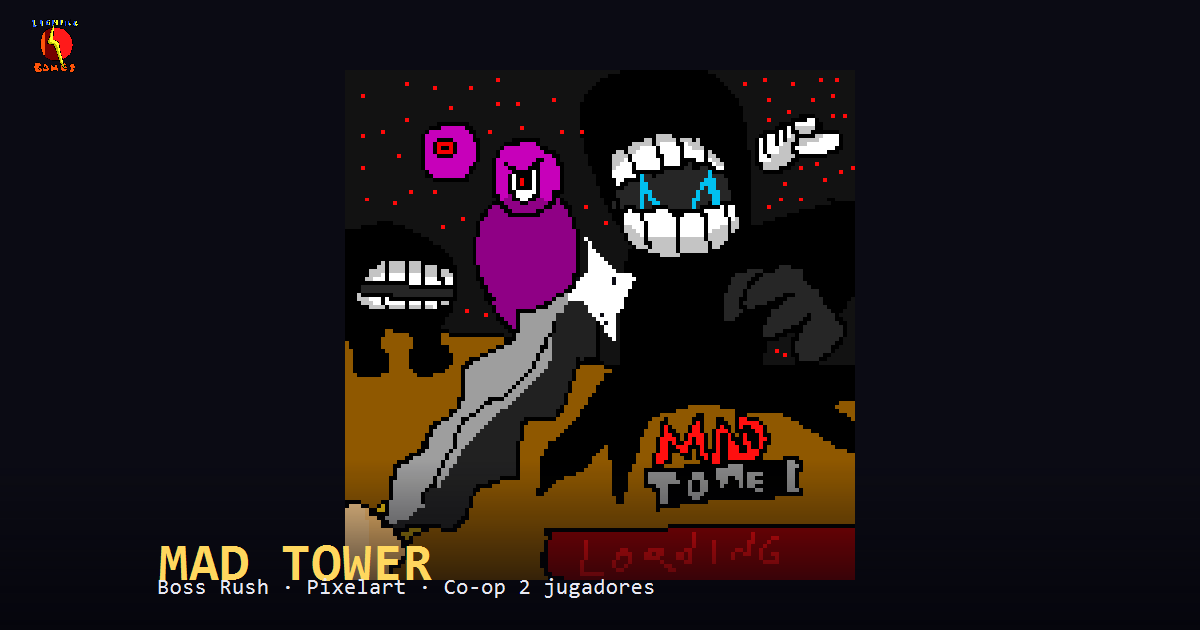
Leo Cantón tiene 14 años y ha convertido el videojuego que llevaba años diseñando en papel en MAD TOWER, un boss rush 2D creado con ayuda de la IA.